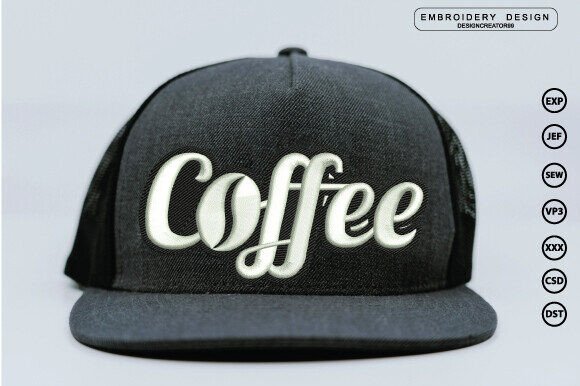
Coffee 3D Embroidery Design Review
In the competitive world of small business merchandise and branded goods, every visual detail counts. As an experienced embroidery designer who has reviewed thousands of digital files for clients ranging from local cafés to national apparel decorators, I look beyond just aesthetics. I evaluate stitch quality, commercial viability, and how a design translates from a screen to a finished product. Today, I am reviewing the Coffee 3D Embroidery Design, a file marketed for its versatility across t-shirts, hats, pillows, kitchen towels, and more. This review focuses on its potential for embroidered patches, staff uniforms, caps, tote bags, and general small business merch.
First Impressions: Professionalism Meets Approachability
The moment you open the Coffee 3D Embroidery Design, the "3D" aspect immediately signals depth and texture. In machine embroidery, this usually implies puff printing techniques or dense satin stitches that create a raised, tactile surface. For a brand identity centered around coffee, tea, or comfort foods, this design strikes a balance between bold and friendly. It feels premium yet accessible, avoiding the overly corporate stiffness of flat vector logos while maintaining enough structure to look professional on a uniform.
The visual personality is warm and inviting. Whether used by a boutique bakery, a florist with a café corner, or a handmade pet brand looking for a cozy aesthetic, the design suggests craftsmanship. It does not feel decorative in a cheap sense; rather, it reads as a deliberate branding asset. The inclusion of multiple formats—specifically PES (Brother, Deco, Babylock) and DST (Tajima)—ensures compatibility with a wide range of industrial and home machines, which is crucial for scalability in production environments.
Real-World Business Applications
When evaluating a digital embroidery file for commercial use, we must ask: where will this live? The Coffee 3D Embroidery Design offers several high-value applications for small business owners and Etsy sellers.
- Embroidered Patches: One of the strongest use cases for this design is creating iron-on or sew-on patches. The 3D effect adds significant perceived value, making it ideal for branded patches on denim jackets, tool belts, or laptop sleeves. These serve as excellent customer gifts or loyalty rewards.
- Staff Uniforms and Aprons: For café owners, consistency is key. Placing this design on the chest of work shirts or the bib of apron embroidery creates a cohesive team look. The raised texture catches light differently than flat stitching, drawing attention to the brand name without being garish.
- Cap Embroidery: Hats are perhaps the most common form of small business merch. The 3D structure holds up well on the curved front panels of baseball caps, providing a sturdy, dimensional logo that withstands daily wear.
- Tote Bag Design: Canvas tote bags are staples for crafters and bookstores. The contrast between the heavy canvas fabric and the plush embroidery creates a luxurious feel, encouraging customers to carry the bag as a walking advertisement.
- Kitchen Towels and Pillows: While these may seem like secondary items, they are high-margin add-ons. A Coffee 3D Embroidery Design on a kitchen towel elevates a basic commodity into a gift-worthy item, perfect for holiday sales or wedding favors.
Strategic Placement and Brand Identity
How a design is placed affects brand identity and customer trust. A well-executed embroidered patch signals durability and care. When customers see a raised, clean logo on a product, they subconsciously associate that quality with the brand itself. The Coffee 3D Embroidery Design supports this by offering a clear, legible focal point.
For custom apparel, consider using this design as a sleeve detail or a back-of-neck accent if the main logo is elsewhere. This layered approach to design assets allows businesses to build a narrative. However, ensure that the thread colors chosen complement your existing brand identity. If your brand uses earth tones, select threads that match; if it is modern and minimalist, stick to monochromatic schemes. Visual consistency is paramount for buyer engagement.
Technical Considerations and Risk Management
Not every design works everywhere. As a designer, I must advise caution in specific scenarios when using the Coffee 3D Embroidery Design.
- Small Patch Sizes: If you plan to reduce this design significantly for tiny tags or miniature patches, test it first. Complex 3D structures can lose definition when scaled down too far, resulting in a blobby appearance rather than a crisp logo.
- Curved Surfaces: While great for cap fronts, be mindful of highly curved surfaces like the crown of a fitted hat or the rounded shoulder of a garment. Ensure the digitization accounts for distortion so the image does not warp.
- High Stitch Density: 3D effects often require dense underlay and top stitching. On delicate fabrics like thin silk or loose-weave linen, this density might cause puckering. Always inspect spacing and confirm hoop size relative to your fabric choice.
- Dark Uniforms: Contrast is vital. If embroidering on dark navy or black uniforms, ensure the thread colors provide sufficient contrast against the background fabric texture. Low-contrast threads can get lost, reducing the impact of the design.
- Frequent Washing: For items like aprons or work shirts that undergo frequent industrial laundering, verify the stability of the 3D foam or padding. Some materials degrade faster than others. Test on real fabric before committing to bulk production.
Practical Designer Notes for Production
To ensure the Coffee 3D Embroidery Design performs optimally in your commercial embroidery projects, follow these practical steps:
- Test in Black and White: Before selecting colors, run a test in monochrome. This helps you evaluate the shape, negative space, and overall silhouette without the distraction of color.
- Check Small Patch Size: Zoom in on the digital file at the actual output size. Are the details still distinct? Can the machine resolve the fine lines?
- Review Thread Color Contrast: Use a printable mockup to visualize the final look. Compare different thread options to see which offers the best readability and aesthetic appeal.
- Inspect Spacing: Look closely at the gaps between elements. Too much space can make the design look sparse; too little can cause threads to bunch.
- Confirm Hoop Size: Ensure your embroidery machine’s hoop can accommodate the design dimensions comfortably, allowing for proper stabilizer placement.
- Test on Real Fabric: Digital screens do not show how fabric behaves. Always stitch a sample on the actual material you intend to use, including any stabilizer layers you plan to apply.
- Create a Mockup for Client Approval: If you are a decorator working with clients, provide a realistic mockup showing the finished product. This manages expectations and reduces revisions.
- Compare Beside Other Assets: Place the design next to your other design assets to ensure it fits harmoniously within your broader collection.
- Confirm Commercial Licensing: Before selling products featuring this design, verify that you have the appropriate commercial license for the embroidery file. This protects your business from legal issues.
Final Verdict
The Coffee 3D Embroidery Design is a robust, versatile asset for any small business looking to elevate their merchandise. Its ability to convey warmth and professionalism makes it suitable for a wide array of industries, from hospitality to retail. By paying attention to technical details like stitch density, fabric choice, and licensing, you can transform this digital file into a tangible symbol of quality. Whether you are producing handmade products for an Etsy shop or outfitting a team of baristas, this design offers a strong foundation for building a memorable brand presence. Remember to always test before you produce, ensuring that every stitch contributes to your business's success.