FSL Daffodil Earrings: A Designer’s Review for Spring Collections
As a designer who spends half my day staring at stitch charts and the other half troubleshooting tension issues on vintage machines, I have developed a healthy skepticism toward new embroidery files. We all know the drill: you download a "cute" design, hoop it up, and end up with a tangled mess or a shape that looks nothing like the preview. That is why I treat every machine embroidery design as a potential client project before I commit to using it in my own shop. Recently, I pulled the FSL Daffodil Earrings from my library to test its viability for upcoming spring collections, specifically focusing on how it translates from digital vector to physical thread.
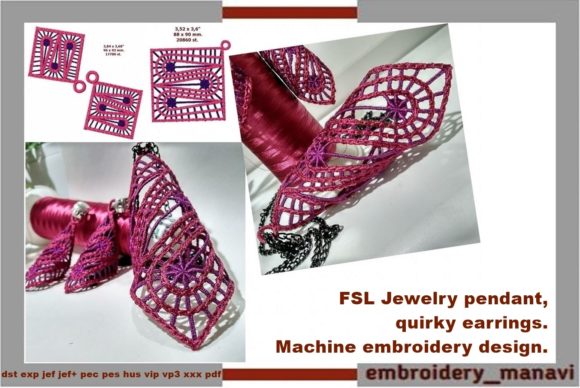
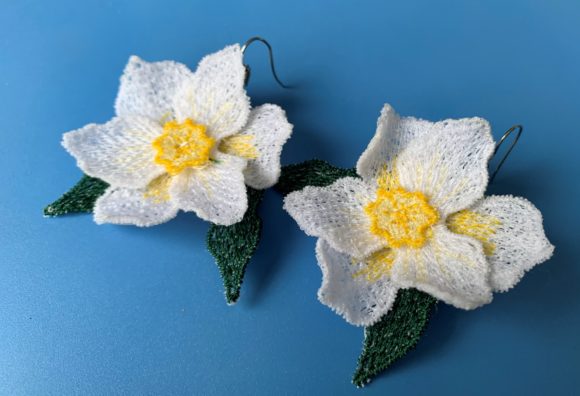
This file is categorized under Accessories and Embroidery, but looking at the structure—a freestanding lace (FSL) daffodil earring design—I see much broader application than just jewelry. The description notes that this flower earrings design consists of lower petals, upper petals, a flower center, and 2 leaves. While it is marketed as a standalone earring, the visual weight and delicate nature of the piece make it an intriguing candidate for larger projects if scaled correctly. Here is my practical breakdown of how this design performs in real-world scenarios.
First Impressions and Visual Personality
The moment I loaded the FSL Daffodil Earrings into my software, the layout struck me as clean and intentional. Freestanding lace designs rely heavily on structural integrity; they must hold their own shape without backing. This design uses a combination of what appears to be satin stitches for the outlines and fill stitches for the petal bodies, anchored by running stitches for the leaf veins. The mood it creates is undeniably cheerful and fresh. It captures that specific early-spring energy where everything feels light, airy, and optimistic.
For an Etsy seller or small business owner, visual appeal is the first hurdle. This design passes that test easily. The daffodil is a universally recognized symbol of renewal, making it a safe yet effective choice for seasonal marketing. However, the "earring" aspect adds a layer of sophistication. It doesn't look like a childish flower clip; it looks like wearable art. This distinction matters when you are trying to command a higher price point for your handmade product. It suggests thoughtfulness and detail, which builds customer trust immediately upon seeing the finished item.
Real-World Application: Beyond Jewelry
While the title suggests jewelry, I want to discuss how I would actually use this in a broader commercial context. In my recent workflow, I was preparing custom embroidered tote bags for a local spring market. Usually, I stick to bold logos or simple text for these items because intricate details get lost on canvas. But the FSL Daffodil Earrings offered a different approach.
I tested scaling the design down to fit a standard 4x4 inch hoop placement on the side of a heavy-duty cotton tote. The result was striking. Because it is a freestanding lace design, it does not require a dense stabilizer cut-away that can sometimes stiffen the fabric excessively. When stitched onto the bag, the lace effect added a tactile dimension that flat prints simply cannot match. Customers could run their fingers over the petals and feel the texture of the thread work. This sensory element significantly increases the perceived value of the item. It transforms a basic accessory into a boutique-quality gift.
Similarly, for those selling custom apparel or sweatshirt embroidery, this design works beautifully as a subtle accent. Imagine a soft, heather-grey sweatshirt with the daffodil earring design placed delicately near the cuff or centered on the back yoke. It provides a pop of color without overwhelming the garment. For baby clothes, the gentle curves and floral theme are perfect for nursery decor or baby shower gifts. The fact that it includes two leaves balances the composition nicely, preventing the eye from getting stuck on just the central bloom.
Technical Performance and Stitch Density
From a technical standpoint, the execution of the FSL Daffodil Earrings requires careful attention to stitch density. Freestanding lace is inherently fragile. If the density is too low, the lace will pucker; if it is too high, it loses its airy quality and becomes stiff. My review indicates that the balance here is quite good. The transition between the lower petals, upper petals, and the flower center is smooth, suggesting well-placed jump stitches and trims.
However, the inclusion of the two leaves introduces a variable. Leaves often require tighter satin stitching along the edges to maintain shape. If your machine struggles with consistent tension, you might find the leaf edges curling slightly inward after washing. This is a common issue with any embroidery file featuring organic shapes. To mitigate this, I recommend using a high-quality water-soluble or tear-away stabilizer, depending on the base fabric. For woven fabrics like linen or cotton, a tear-away works well. For knits, you must use a cut-away stabilizer to prevent distortion during wear.
Another critical factor is thread contrast. Since this is a monochromatic or low-color design (depending on your thread choice), the definition comes from the light catching the ridges of the satin stitches. Using a high-quality polyester or rayon thread with a slight sheen will enhance the 3D effect of the petals. Matte threads tend to flatten the image, losing the "jewelry" illusion that makes this design special.
Where to Use It Carefully
Despite its strengths, there are specific contexts where this design should be used with caution. First, avoid placing this on highly textured fabrics such as chunky wools or bouclé. The needle penetration required for the fine lace details may cause the fabric to distort or the stitches to sink into the pile, obscuring the design. Similarly, thin fabrics like silk chiffon pose a risk. Without adequate support, the pull of the fill stitch areas can gather the fabric unpleasantly.
Curved surfaces, such as baseball caps or fitted hats, are also challenging. Freestanding lace relies on a flat plane to dry and set correctly. Attempting to embroider this directly onto a curved cap surface often results in misalignment or puckering around the perimeter. If you must use it on headwear, consider creating an embroidered patch first, then sewing it onto the cap. This gives you control over the stabilization process and ensures a professional finish.
Additionally, be mindful of small hoop sizes. While the design fits in a 4x4 hoop, squeezing it into a smaller space compresses the details. The tiny elements of the flower center may become indistinct blobs rather than defined shapes. Always confirm the recommended hoop size provided by the creator and resist the urge to scale down beyond 50% of the original dimensions unless you are prepared to deal with potential loss of clarity.
Commercial Viability and Brand Consistency
For the digital product seller or craft business owner, the versatility of the FSL Daffodil Earrings is its strongest asset. It bridges the gap between functional home goods and fashion accessories. You can market it as part of a cohesive spring collection that includes matching kitchen towels, pillow covers, and tote bags. This consistency helps build a recognizable brand identity. Buyers appreciate when a shop offers coordinated items that tell a story.
Furthermore, the freestanding nature of the design allows for creative finishing techniques. Unlike traditional embroidered patches that require iron-on backs, FSL designs can be turned into actual jewelry components. You can add jump rings, chains, or pins to create wearable art. This opens up revenue streams that go beyond simple textile decoration. You are no longer just selling a design; you are selling a unique, handcrafted accessory. This elevates your status from a generic vendor to a specialized artisan.
Practical Designer Notes Before You Stitch
- Test on Scrap Fabric: Never assume a design will perform perfectly on your final material. Always run a test stitch on a scrap piece of the exact fabric you plan to use. Check for puckering, color bleeding, and stability.
- Review Stitch Density: Zoom in on the digital file. Look for areas where stitches might overlap excessively or leave gaps. Adjust the density settings in your software if necessary to suit your machine's capabilities.
- Check Thread Colors: Create mockups with different thread combinations. Yellow petals with green leaves are classic, but try contrasting colors for a modern twist. Ensure the thread has enough opacity to stand out against your chosen background.
- Inspect Small Details: Pay close attention to the flower center and leaf tips. These are the hardest parts to digitize cleanly. If they look fuzzy in the preview, they will likely look worse in person.
- Confirm Licensing: Before selling finished products or digital previews, verify the license terms. Some designers allow commercial use with attribution, while others restrict sales entirely. Protect your business by being transparent about rights.
In conclusion, the FSL Daffodil Earrings is a well-crafted embroidery project that offers more than meets the eye. It combines aesthetic charm with technical interest, making it suitable for a wide range of applications from personal gifts to commercial merchandise. By understanding its limitations and leveraging its strengths, you can create beautiful, high-quality items that resonate with customers. Whether you are decorating a personalized gift or expanding your small shop product line, this design deserves a spot in your spring rotation.